
Blogs
What's New Trending
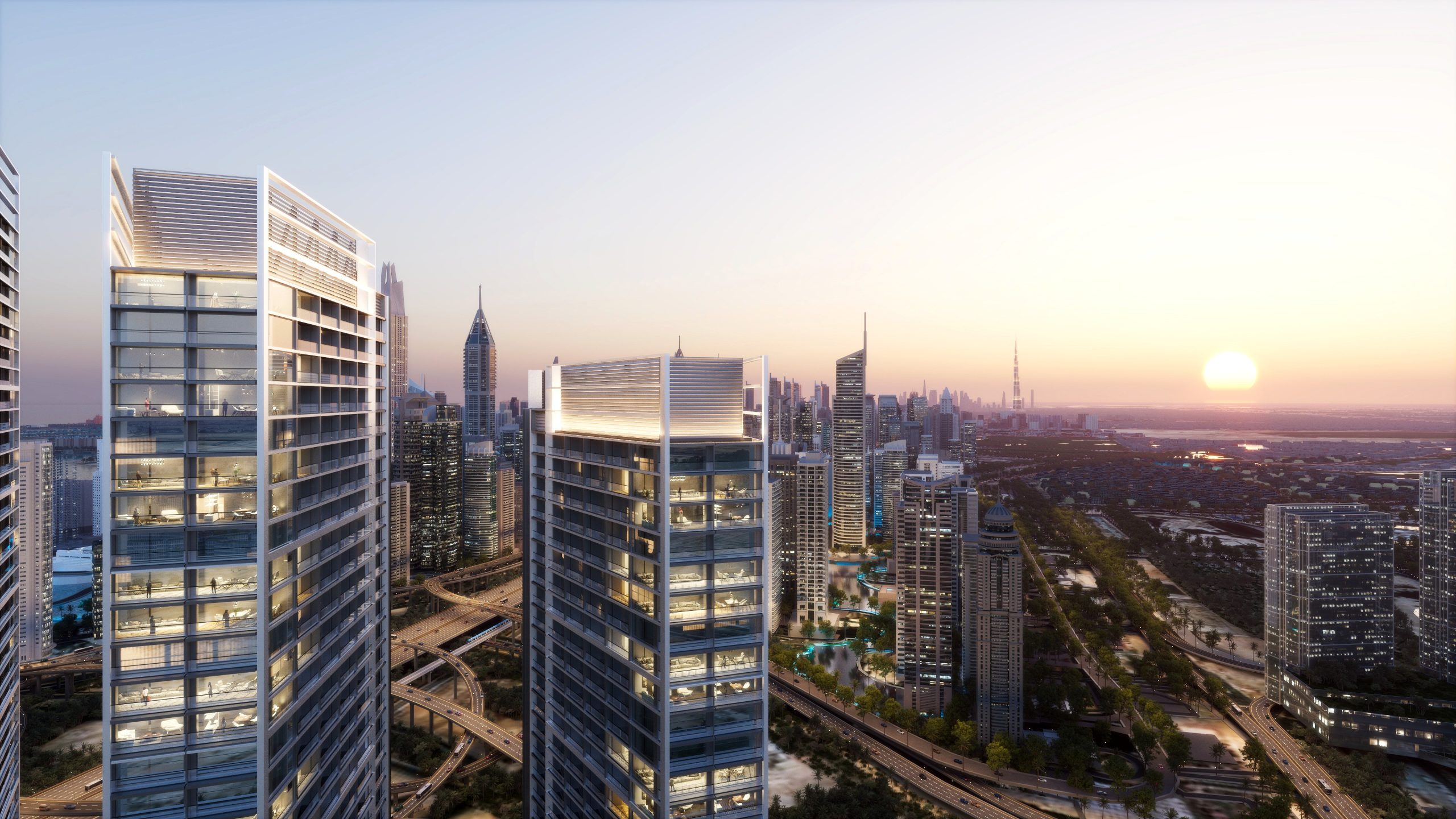
As the world moves toward a new economic cycle, with its corresponding changes to policy alignment, regional fragmentation and growing volatility in inflation, the opportunities for stable returns on investment have also begun to shift.
Growth in the world’s major economies remains intact; however, it has been uneven due to regional and sectoral differences.
As a result, the flow of investment capital is increasingly moving from low yield traditional investment vehicles (e.g., stocks and bonds) to more tangible income-producing assets.
In this environment, Dubai has emerged as one of the most significant beneficiaries of the global investment capital realignment.
A combination of currency stability, favourable regulations for investors, strong demographic trends, increasing participation by institutional investors, and a diversified real estate market provide ample evidence of how global macroeconomic trends will translate into the continued local economic strength of Dubai’s residential and commercial real estate markets by the end of Q3 2025.
Here’s what this article delves deeper into:
Intrigued, Let’s get straight into it.
The conclusion of Quarter 3 2025 finds the world has experienced continued growth; however, this growth has not been evenly distributed. Currently, the global economy continues to adjust to numerous factors including developing trade policies, monetary realignment, developing countries, and an increasing threat posed by multiple geopolitics.
By year-end 2025, analysts predict Global nominal GDP will be down from 2024 levels to approximately 2.8-3 percent. Despite a 1.4 percent decline in US output during the first half of 2025, because of elevated tariffs, interest rates and poor labour conditions, the global GDP continues to expand.
More broadly, Global Nominal GDP has been supported by fiscal stimulus measures taken by Germany and China, structural reforms in Japan, and robust domestic growth in India,
However, the globally diversified factors supporting current growth have mitigated some impact on the global economy as it continues to contract.
As a result, KKR’s Global Macro & Asset Allocation team identifies a shift from fixed income Investing Regimes. They are creating a “New Investing Regime”, where normal annual returns for all asset classes have decreased due to higher historical averages, increasing inflation, increasing volatility and more illiquid investments with cash flow backing.
The economic environment in Dubai provides a tremendous tailwind for the region’s economy. The stability of the local currency, the absence of a capital gains tax and the transparency of the government regulatory framework all support the reallocation of global portfolios from low-yielding fixed income to real asset investments, creating strong income opportunities for the investment community.
Recommended Read: Dubai Metro Blue Line: Project Overview and Strategic Significance
As disinflation and slower Long End Treasury Yields continue, and investors’ focus on duration management increases, global capital allocators have established an even greater rotation into REITs, Infrastructure and Asset-based finance.
The Federal Reserve has indicated that they will likely implement three rate cuts in 2025 bringing the terminal target rate to 3 – 3 ¼%, thus providing a gradual decline in the costs of capital and increasing mortgage affordability and transactional liquidity in the largest Real-Asset Hubs, particularly, Dubai.
KKR reports that Private Real Estate is projected to produce 8 – 9% annualized Returns over the next five years which will far exceed the majority of the Public Markets.
This is also supported by significant investor demand for both Off-Plan and Income-Producing Residential Lots as evidenced in Dubai’s Q3 2021, which displays a high demand for inflation-hedged Cash Flow and significant population growth.
The accomplishments achieved by the Dubai Property Market in the third quarter alone were sensational.
There were 54,028 transactions (a record) worth AED134.6 billion (USD36.6 billion) recorded in this quarter, which equals a 15.3% increase – in terms of value – (versus Q3 2024) and 14.8% increase in terms of transaction volume (versus Q3 2024).
When comparing Q3 2025 with Q2 2025, one can see that the increases in both transaction volume and number of transactions (i.e.: 9.4% increase in the number of transactions) continue to be consistent with trends within the Dubai Property Market in 2025, reflecting strong demand both from established communities and new communities.
The growth of the Dubai Residential Market, according to our analysis, is driven primarily by owner-occupant and institutional demand rather than investor/speculative buying, which emphasises the achievement of the Dubai Residential Market in becoming a mature Global Housing Market.
Also Read: YoY Performance of Dubai’s Real Estate Market in 2025: Prices, Supply & Outlook
According to reports, mid-market housing is driving the growth of Dubai’s real estate market and accounts for over half of total residential real estate transactions in Dubai.
The mid-market housing sectors also benefit significantly from the favorable payment structure, developer incentives, and increased demand for new residents as a result of the Government of Dubai’s long-term visa reforms.
Forecasts for 2025 indicate that areas like Jumeirah Village Circle, Dubailand Residence Complex and Sobha Hartland will be leading the way in transaction activity due to their combination of affordability, accessibility and quality facilities, while the prime areas of Dubai Hills Estate, Dubai Marina and Dubai Maritime City continue to show stability within pricing and maximised returns.
This highlights Dubai’s ability to maintain a strong balance between luxury and value in the property sector.
Again, off-plan transactions dominated the market, generating an estimated total of 40,680 transactions with a total value of AED96.2 billion (US $26.2 billion). The growing demand for an off-plan property in Dubai, particularly those that have reputable developers and brand names attached to them, reflects the strength of the market.
In comparison, the ready segment accounted for 13,348 transactions with a total value of AED38.3 billion (US $10.4 billion). Demand for the completed product was focused on family-oriented communities where both end-users and yield-seeking investors preferred a completed product to access financing through increased accessibility of mortgage products.
The combination of these two components, speculative absorption of early-stage products and deeper demand for end-users, will continue to provide a stable environment for the Dubai real estate market and will improve the overall liquidity of the market.
Recommended Read: What is the best time to buy property in Dubai?
The commercial property industry continued to increase in value, achieving a volume of AED30.40 billion (USD8.30 billion) through 3,431 separate deals with AED17.70 billion (USD4.80 billion) related specifically to land deals, as developers prepare for the next supply cycle of 2026-27.
Furthermore, global institutional investors as well as REITs and private equity funds are looking to increase their investments in the Business Bay, DIFC and Dubai South markets and this has led to a focus on Grade A office assets that have both strong tenancy profiles and comply with ESG regulations.
As of late October 2023, average office capital values are approximately AED2,000/sqft, an increase of over 160% compared with the average value of AED768/sqft recorded in 2021 — indicating an ongoing strong demand for premium office space. Occupancy levels in the commercial property sector have remained stable, currently sitting above 91%
.
| Category | Details |
| Total Commercial Transaction Value | AED 30.40 billion (USD 8.30 billion) |
| Number of Deals | 3,431 transactions |
| Land Transactions Value | AED 17.70 billion (USD 4.80 billion) |
| Developer Activity | Land acquisition ahead of 2026–27 supply cycle |
| Key Investment Locations | Business Bay, DIFC, Dubai South |
| Investor Profile | Global institutional investors, REITs, private equity funds |
| Asset Focus | Grade A, ESG-compliant offices with strong tenancy |
| Average Office Capital Values | ~AED 2,000 per sq ft |
| Capital Value Growth | +160% vs. 2021 (AED 768 per sq ft) |
| Occupancy Levels | 91%+ across commercial sector |
Another significant increase was reported in the rental market. Rental prices reached an overall value of 12.7 billion dirhams or 3.5 billion U.S. dollars, and were recorded across 137,700 lease contracts.
Property types with the strongest rental growth included Nad Al Sheba, which saw a jump of 28% compared to last year (2025), and Jumeirah, which had a rise of 23%. Suburban neighbourhoods like The Villa and Sobha Hartland established sustained rental growth.
Additionally, due to the influx of 155,000 new residents (+12.9% YTD) and continued white-collar job creation and business relocations, rental prices throughout Dubai are becoming increasingly competitive in terms of returns, with average rental yields generally within the 6-7% range for the majority of the larger mid-market rental districts in Dubai, considerably exceeding the average for major cities throughout the OECD region.
Dubai office market trends showed a continued transformation into a mature, globally benchmarked asset class.
Free-zone saturation and heightened corporate leasing have created sustained upward pressure on prime rents and capital values, signaling that Dubai’s commercial real estate sector is entering a long-term equilibrium phase supported by stable fundamentals.
Dubai real estate forecast for 2026 and 2027, anticipate the completion of approximately 250,000 residential units, representing the tail end of the post-COVID expansion cycle.
While agencies such as Fitch Ratings forecast a potential 10–15% price correction in 2026, this appears overstated given:
Developers have shifted toward phased, data-driven planning, emphasizing sustainable community design and mid-income affordability — a marked contrast to the speculative launch patterns of earlier cycles.
The Q4 2025 of Dubai real estate market is anticipated to be its most active quarter. The market stands at the intersection of accelerating institutional investment in Dubai and strong local demand.
Key drivers into the end of year include:
Dubai’s property domain represents all the hallmarks of a globally sustainable, balanced, and depth-rich market:
Recommended Read: How to Assess Property Value: Key Factors to Consider When Choosing the Right Investment
The third quarter of 2025 cements Dubai’s status as one of the strongest and profitable real estate markets internationally.
Owing to the robust domestic economic base and global rate cuts on the horizon, Dubai’s real estate ecosystem enters Q4 with unprecedented confidence — balancing stability, growth, and yield in an increasingly volatile real estate market.
For more information on investing in Dubai real estate, get in touch with our highly experienced professionals at TAQ Global Properties:
Email: info@taqproperties.ae
