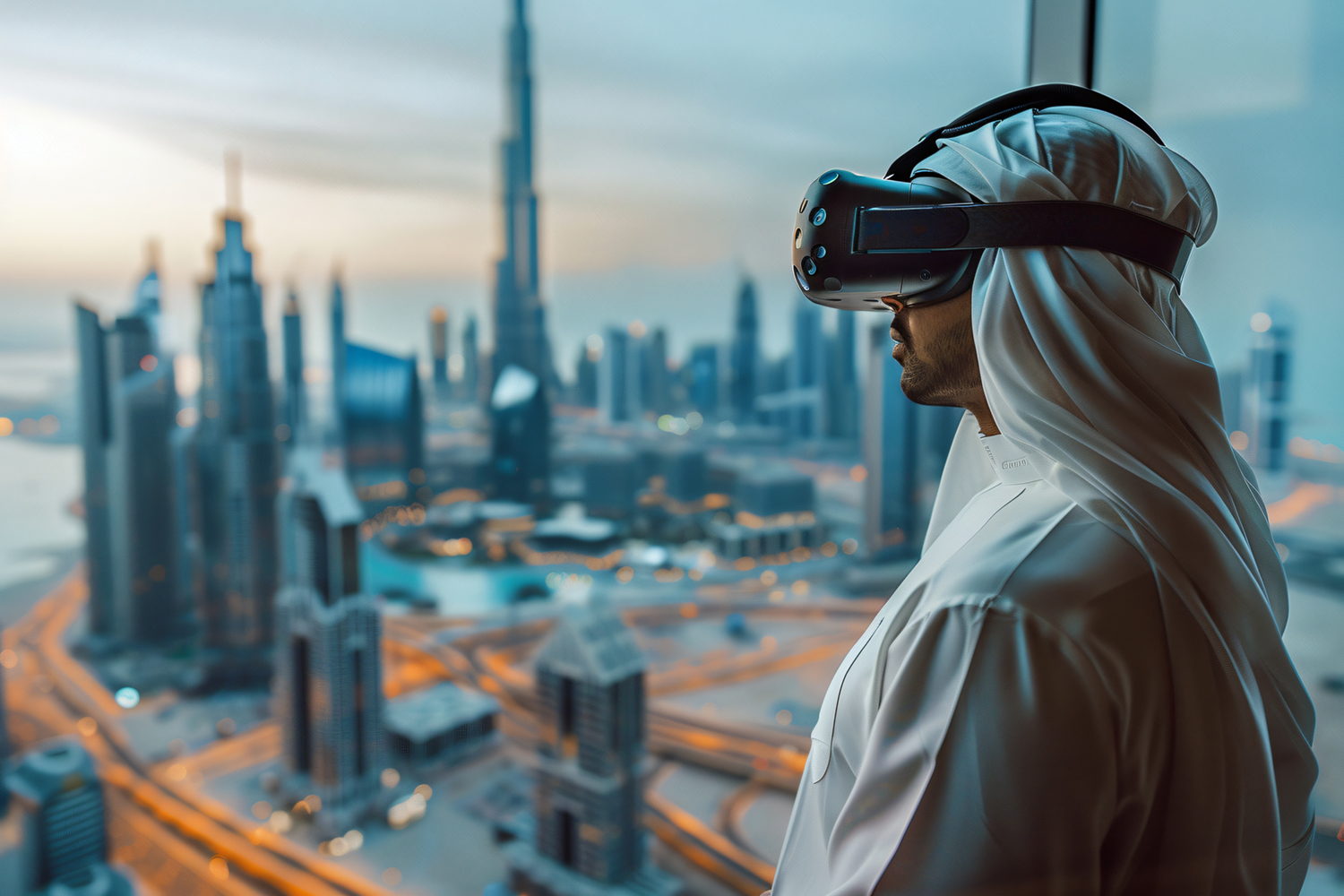
Dubai has quickly transformed itself from a regional hub for trade and tourism to an extremely fast growing global hub of information technology and innovation (IT).
Dubai is no longer dependent only on oil revenue, but has evolved into a key player in the world of tech, by positioning its economy around technology, data and artificial intelligence.
The city’s government has taken an approach of bold and innovative leadership, invested heavily in ALD infrastructure and established a global, economically connected environment that are helping to reshape what modern IT hubs will be.
This article will delve deeper into the ins and outs of Dubai’s Tech landscape, delving deeper into the aspects such as:
How Dubai is growing into a global power in information technology?
Key policies that have enabled Dubai to become a digital powerhouse
The magnitude of capital invested in and flowing to Dubai’s IT ecosystem
Finally, this article will look at what challenges and opportunities will determine if Dubai can sustain its competitiveness and surpass traditional technology hubs in the future.
Intrigued, Lets get straight into it.
1. Futuristic Governance & Modern Vision of the UAE Government
The development of Dubai as an IT leader is influenced initially by long-term vision and structured government policies. The UAE has established digital strategies that serve as a foundation for the transformation of the economy, through use of technology, towards a focal point of growth within the UAE.
The UAE government’s AI Strategy launched in 2017 has expanded to incorporate AI into sectors including healthcare, transport, government, energy, and education, and will ultimately enable the UAE to become one of the top 3 nations for AI by 2031. Wikipedia
In 2025, AI and digital technologies will be a core element of the country’s growth strategies, with record investments in both public and private sector infrastructure being undertaken as a result of widespread implementation of digital technology in all levels of government. Arabian Business
The UAE and Dubai have introduced dedicated economic zones such as Dubai Internet City and Dubai Silicon Oasis, and offer business incentives such as tax exemptions, foreign ownership of 100% of shares, and regulatory environments that support the development of IT and technology sectors globally. Global CIO
These framework policies both demonstrate a serious commitment from the UAE and Dubai government and provide an ecosystem of regulatory and economic support that allows businesses to connect and grow rapidly regardless of stage in their lifecycle.
2. Capital, Investment and Infrastructure Build-Out
Dubai’s booming information technology sector is largely dependent on investment from both domestic and international sources. The total amount of investment in artificial intelligence (AI) in the United Arab Emirates (UAE) in 2024–2025 was over AED 543 billion.
This amount was made up of money from sovereign wealth funds, large multinational corporations, and private investors. According to the Tribune India, large global technology companies are making significant investments to support the future of Dubai.
For example, Microsoft has pledged US$15.2 billion to support initiatives related to AI, cloud infrastructure, and talent development, and this has solidified Dubai’s position as a key player in the artificial intelligence (AI) and digital service sector.
Computer Weekly has reported that the implementation of major data center projects in Dubai, such as the Stargate UAE initiative, will dramatically increase the capacity for technology operations by creating millions of employable individuals by 2026.
Wikipedia states that the above-mentioned investment commitments of billions of dollars are not just symbolic; they are the foundation on which contemporary information technology infrastructures rely on; in this case, they represent data centers, cloud zones, and AI clusters.
3. Startups, Talent, and Global Events
Dubai has become a thriving tech hub for both new and established entrepreneurs through the support of the local government and its investments into digital businesses and entrepreneurs as well as supporting local talent while attracting other entrepreneurs and companies from the worldwide technology community to relocate or establish a presence in Dubai.
Global technology events such as GITEX GLOBAL have also played an important role in solidifying the position of Dubai as the premier global meeting place for the technology industry, with an expected attendance of over 200,000 from more than 180 countries in 2025.
The open economic policies of Dubai also allow for the easy immigration of international workers via their tech visa programs and their extended residency programs, which are created to attract highly skilled international workers.
As a result, Dubai has become the investment capital for numerous global companies and an attractive market for global technology talent.
4. Data Centers and Digital Infrastructure
The success of Dubai as a centre for Information Technology stems from the rapid establishment of Data Centre Capacity as the foundation of Cloud Computing, Digital Service Provision and AI Workload Support.
Businesses of all types, including global hyperscalers (i.e., Amazon Web Services), and the regional CIO community now use many Data Centres located within both Dubai and the United Arab Emirates, offering Cloud Computing and Edge Services,
in addition to high-performance AI training. Such projects as Stargate, being developed in collaboration with technology leaders, will offer some of the best facilities for AI supported computing, outside of traditional data and technology hubs, and create hyper-scaling capabilities for Machine Learning, Analytics, and Next Generation Applications.
Additionally, by offering the requisite computing capability, Data Centres establish the UAE as a regional hub between Europe, Africa, and Asia, thereby positioning it as the ideal Geography for Companies seeking to Route Data and Provide Digital Services.
Dubai’s digital transformation efforts extend far beyond just improving infrastructure; it is visible in every area of society and economics:
Examples of Government service delivery and Public sector: By 2025, UAE is expected to be one of the highest countries in the world to implement AI technologies into their government services. This has helped the UAE to become more productive and deliver better services. Khaleej Times
Smart city integration: Dubai’s smart traffic and smart urban planning systems, as well as their real time service operations, demonstrate the way that emerging technologies such as IoT and Data Analytics are used in how cities operate. visit: www.investindubai.gov.ae
Enterprise Digitization: Much of Dubai’s business is moving rapidly toward implementing and utilizing AI-powered solutions in Finance, Logistics, Healthcare and Retail sectors. This significantly increases productivity and allows for the competitive development of digital products. Fintechnews Middle East.
The fact that multiple industries in Dubai are now adopting these technologies means that Dubai is not simply a geographic location where data and technology reside, but it is fully integrated into daily economic activity, making it one of the world’s top IT centres.
6. Competitive Landscape: Middle East and Global Context
The rapid growth of Dubai is occurring in a more competitive regional environment as other Nations within the Gulf Cooperation Council (UAE, Saudi Arabia and Qatar) have started their rollout of lofty ambitions related to the deployment of Artificial Intelligence and Digital Infrastructure.
Although Saudi Arabia has invested in an enormous amount of data centre infrastructure and has impressive data centre growth predictions, because of the combination of Dubai’s early entry position into this space, well-established and supportive regulatory frameworks, and a strong financial infrastructure, Dubai has a sustainable competitive advantage in this arena. World Economic Forum
At the same time, on an international scale, cities such as Silicon Valley, Singapore and London continue to be recognised as the leading tech hubs globally, with a wide array of deep ecosystems developed over extended periods of time.
Rather than attempting to duplicate these cities’ models, Dubai’s strategy is to build a differentiated, internationally interconnected hub, taking advantage of Dubai’s geographical location as well as the favourable business environment and willingness to collaborate with a range of businesses globally.
Dubai’s expansion continues gaining traction despite several obstacles. These obstacles include:
Resource sustainability where rapid AI and data center growth create higher environmental concerns (i.e., energy and water consumption for cooling).
Maintaining geopolitical balance between global powers through partnerships and technological partnerships. Global cooperation must similarly balance national security, data governance and different competitive tech supply chains.
The global tech market will continue to be highly competitive because there is more demand for specialized IT and AI talent than an adequate local supply; thus, it will require continuous updates and changes to immigration and education policies and programs.
The Middle Institution Institute continues to highlight how proactive investment & cohesive policy is the backbone of Dubai’s resilient ability to navigate these challenges.
8. What the Future Holds: 2030 and Beyond
The Path Forward – Dubai will not only continue as a major IT Centre; it will likely reshape what it means to be a global IT centre. As it continues to add to its AI Infrastructure (including GPU clusters and worldwide cloud providers), this growth will help all types of AI Companies and Services to flourish.
Dubai’s position as a digital crossroads between all Continents provides an opportunity for the position of dominant global data exchange and service delivery.
Dubai will continue to enhance its partnerships with Major Tech Companies and National Innovation Funds, thus accelerating the R&D and deployment commercially of Next Generation Technology.
If trends continue, Dubai will be able to compete with the Traditional Digital Leaders not by copying those established leaders but by leveraging Policy Agility, International Networks, and Infrastructure Vision to get there sooner rather than later.
The Bottom Line
In summary, the Dubai IT Revolution consists of data, vision, and a global perspective for its continued Growth. The rapid growth of Dubai’s economy from an Oil-Based Economy to being recognised on a global level as a centre for IT & Digital Innovation, is an extraordinary accomplishment that has taken place because Dubai has done this through Strategic Planning, Long-term Investment, and Collaboration between Public Sector and Private Sector in the Development of an Environment of Innovation.
Through the Engagement of the Major Global Tech Leaders and Building of World-Class Infrastructure, and Building of a Culture of Innovation, and Continued Growth of Investment and The Way Technology will Infuse its Continued Presence in the Growth of all Areas of our Society – Dubai is becoming One of the Largest IT Centers Worldwide.
For more information on investing in Dubai real estate, get in touch with our highly experienced professionals at TAQ Global Properties:
Location: Office 1003, Dusseldorf Business Center, Al Barsha, Dubai, United Arab Emirates